Rhinox makes stainless-steel press fittings and pipes, and — with Wepit — multilayer composite pipes. Their products go into buildings across India, which means their warehouse is the heart of the business: every order, every delivery, every dealer commitment depends on the stock records being right.
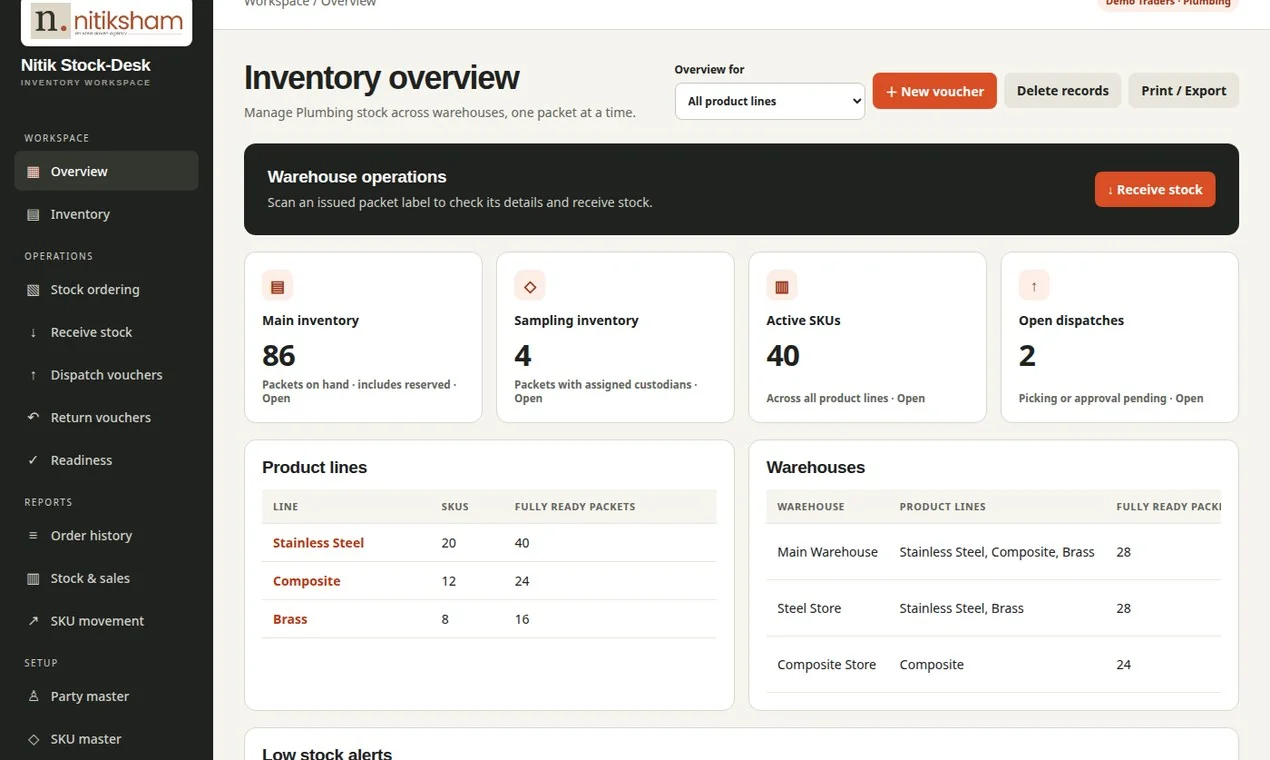
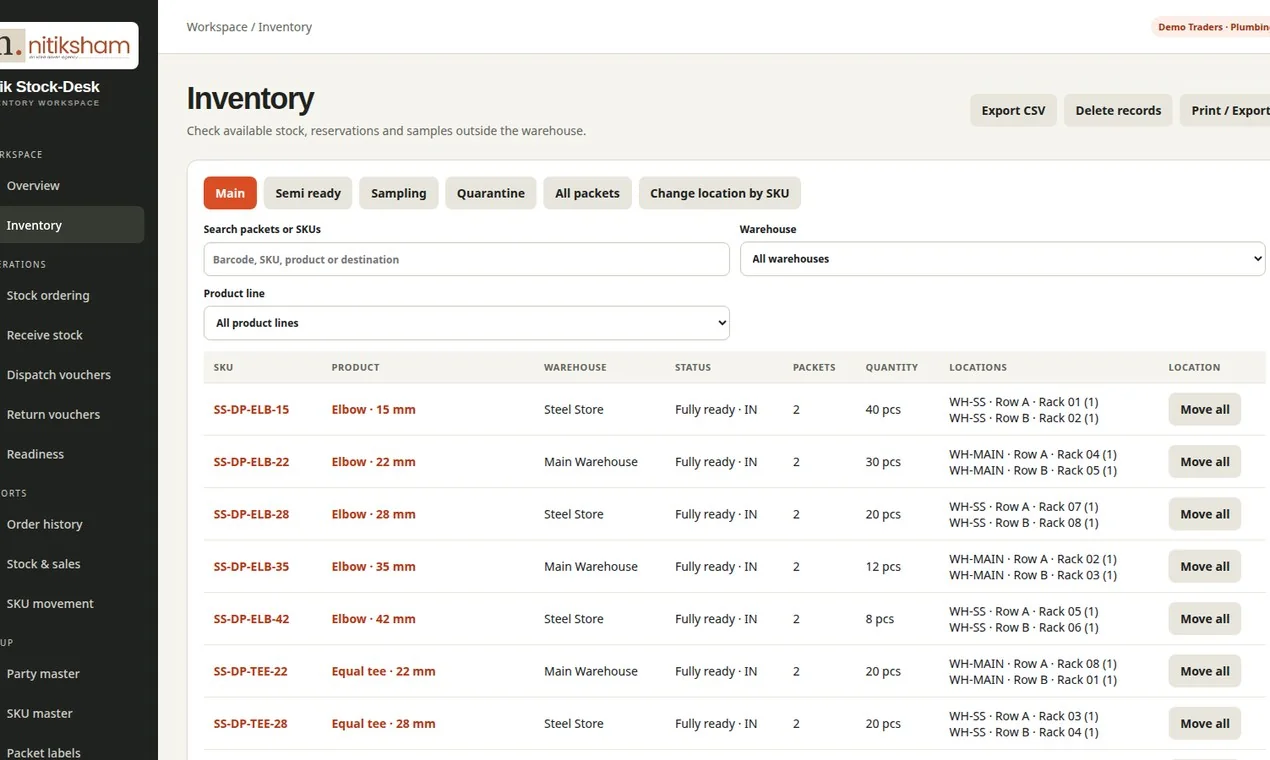
Today, Rhinox runs its stock on Nitik Stock-Desk — fully. Receiving, storage, picking, dispatch and reports all happen in one system. Getting there took understanding the problem first, not selling software first.
The problem: plenty of software, none of it fitting
Before Stock-Desk, Rhinox had tried many software tools for stock management. None of them managed their stock properly.
That is a familiar story for businesses with a real warehouse. Most ready-made stock software is built for a generic shop: a simple list of products, quantities in and out. But a fittings-and-pipes business does not work like that. The catalogue is wide — many sizes, variants and types. Goods arrive in cartons and batches. Stock has to be found fast on a shelf, picked correctly, and dispatched without mistakes. When the software does not match how the work actually happens, people stop trusting it — and go back to paper, memory and Excel.
They even spoke to SAP. But SAP was far too costly — and every modification came with a high extra charge. For a business that needed software shaped around its own workflow, enterprise pricing plus modification fees did not make sense.
Rhinox did not need another generic tool. They needed software shaped around their own way of working.
What Nitiksham did: understand first, then build
Nitiksham started by understanding Rhinox's problem — how their stock actually moves, from the moment goods arrive to the moment they leave. Then the team designed Stock-Desk's modules around that workflow, adding the functions Rhinox needed so their requirements were fully met.
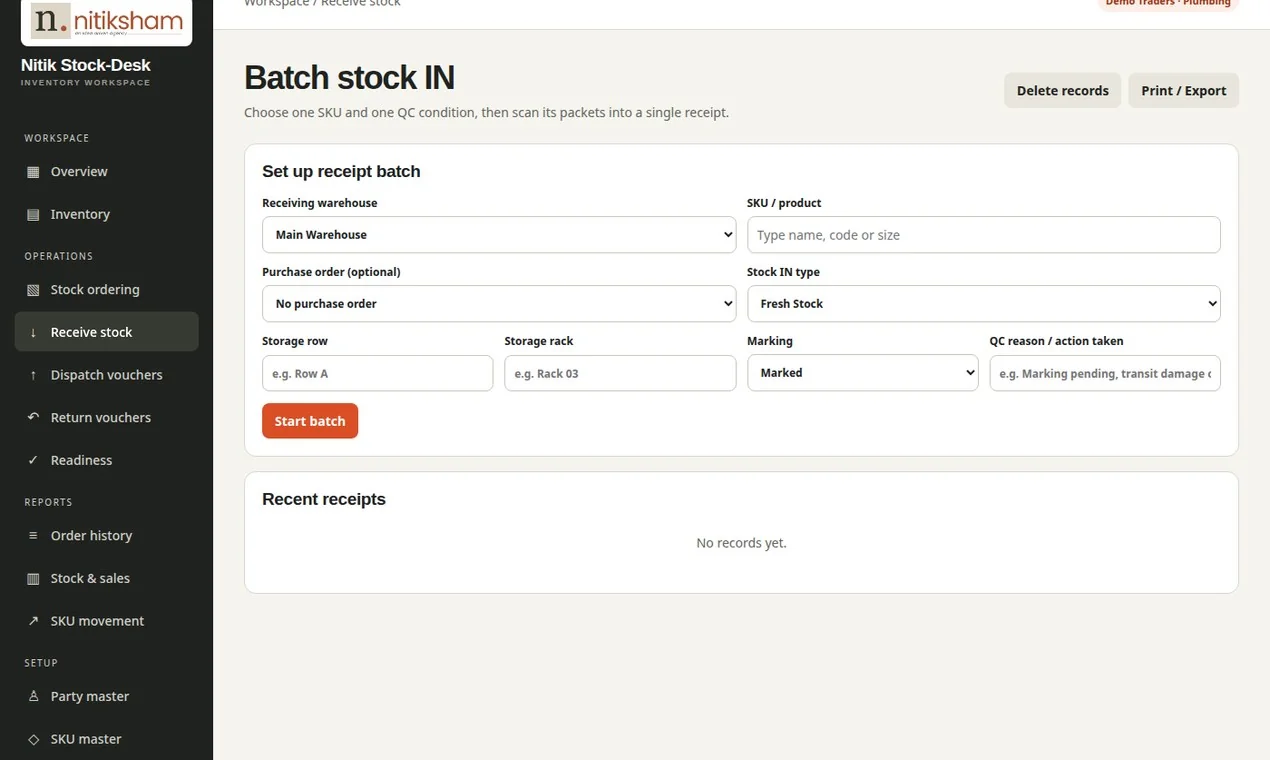
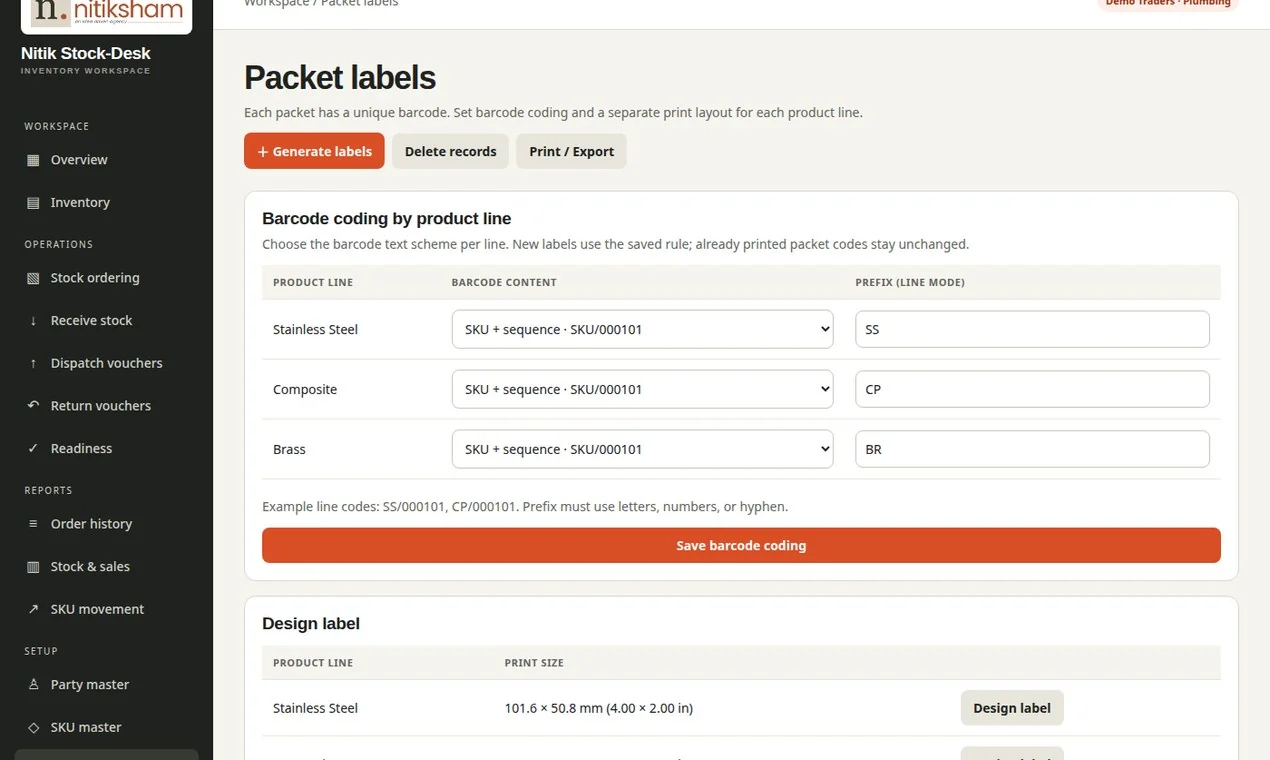
Barcode stock-in. Goods are received by scanning, in seconds — no manual typing, no wrong entries at the gate.
Rack-and-row locations. Every item has a findable place in the warehouse, so staff can locate stock instead of searching for it.
Receiving that matches reality. SKU-level receiving for pre-barcoded goods, carton receiving for bulk arrivals, and CSV bulk import for getting large catalogues into the system quickly.
Batch and expiry tracking with FEFO picking. Stock moves first-expired-first-out, so nothing sits and goes stale.
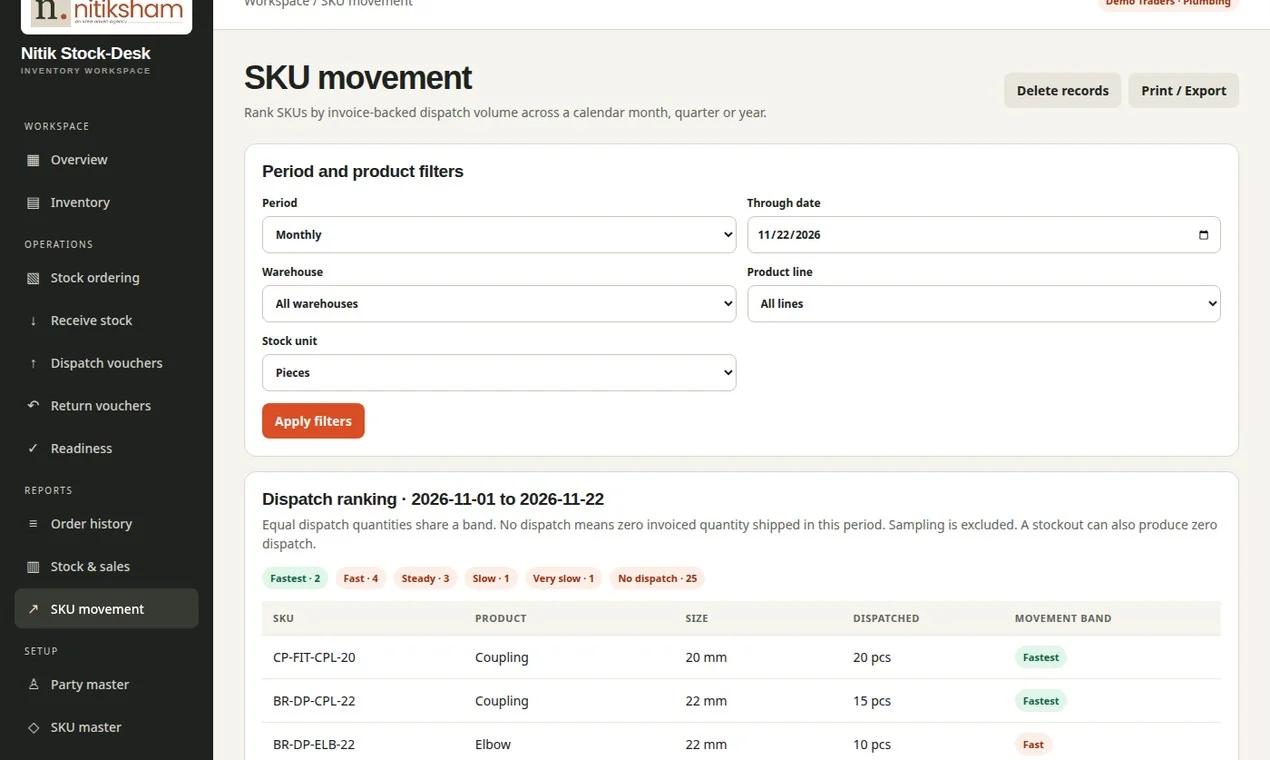
Variants, serial and IMEI tracking, and warranty records. For a catalogue where the same product comes in many sizes and types, each variant is tracked on its own.
One live picture, many computers. The shop, the warehouse and the office all work on the same live stock data at the same time — so everyone sees the same numbers.
None of this was a generic feature list handed to the client. Each module was designed around how Rhinox actually works — which is why the team uses it every day instead of working around it.
The result: fully working on Stock-Desk
Today, Rhinox runs fully on Nitik Stock-Desk. The software that once never quite fit is gone; the warehouse runs on a system built around its own workflow. And it came within their budget — fully working stock modules and functions, without enterprise pricing or per-modification charges.
For traders and wholesalers facing the same problem — software that never quite fits — the live demo is at stock.nitiksham.com, and the product page at nitiksham.com/nitik-stock-desk/ covers features and plans.