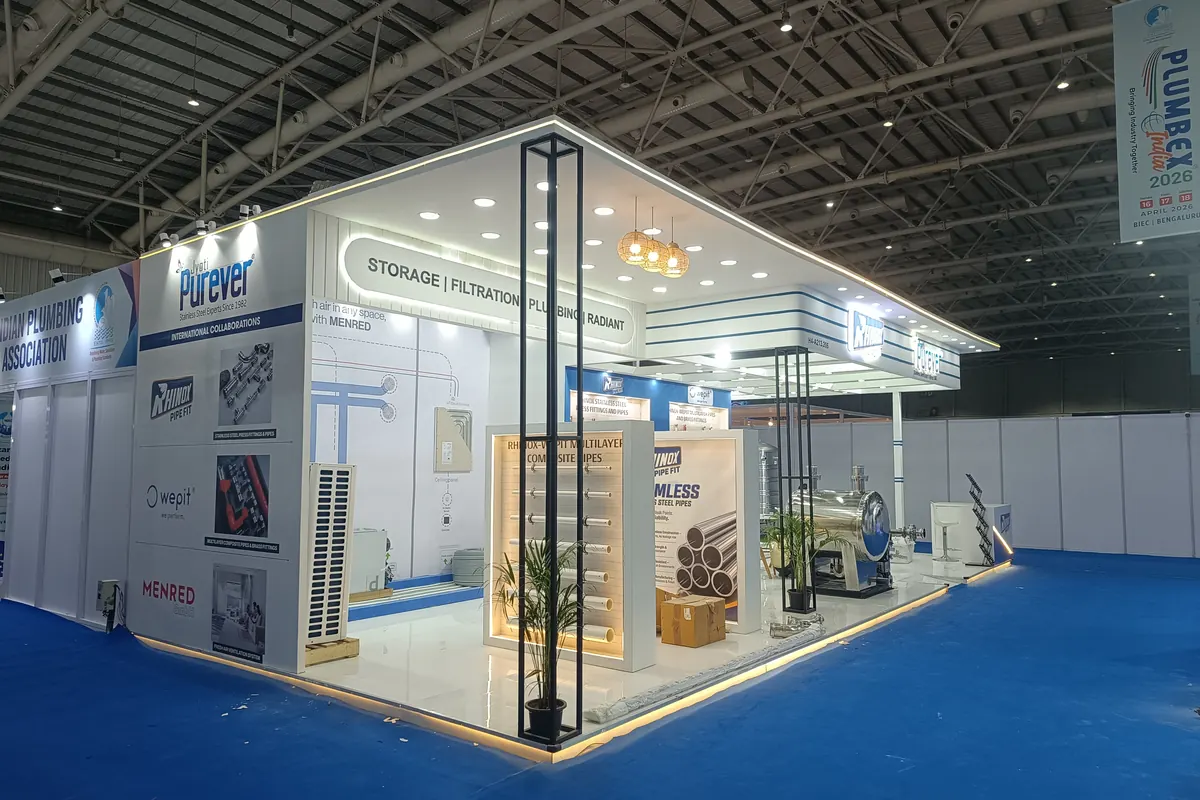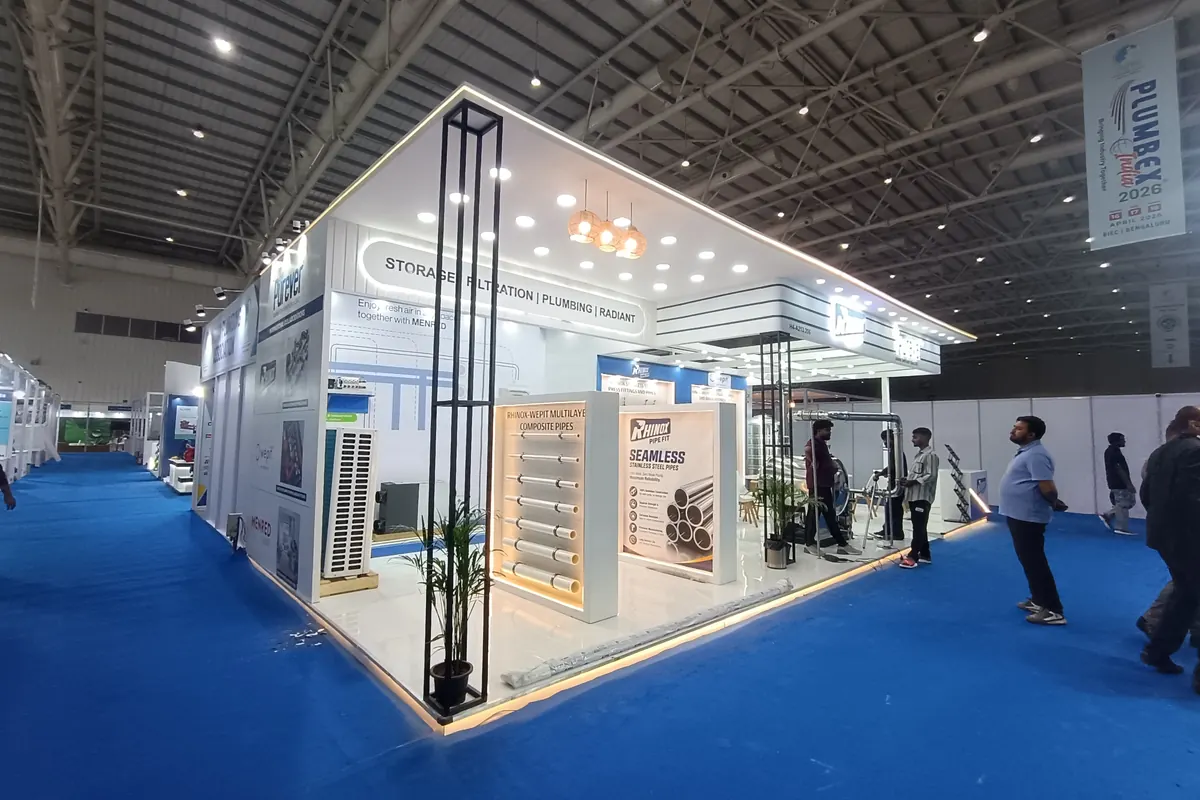
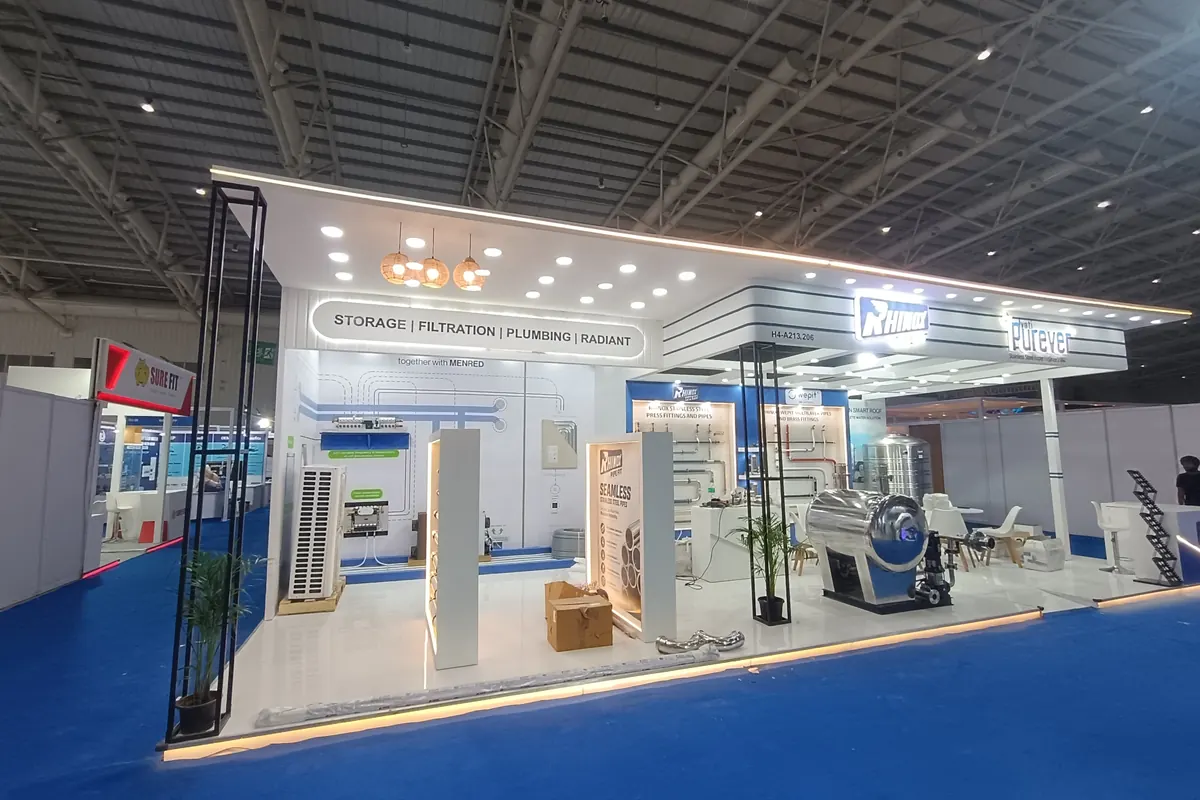
From 16 to 18 April 2026, the plumbing and water industry gathered at the Bangalore International Exhibition Centre (BIEC) in Bengaluru for PLUMBEX India 2026. Purever and Rhinox were there together — sharing a single joint stall that Nitiksham designed and delivered.
Two brands, one space, three days: the stall had to stop people in the aisle, explain both brands in seconds, and give visitors a reason to walk in and talk.
The brief
Purever and Rhinox make products that work together in the same buildings. Purever presented stainless-steel water storage, filtration, plumbing and radiant solutions. Rhinox showed its stainless-steel press fittings and pipes, alongside the Rhinox-Wepit multilayer composite pipes. Together, they cover the whole journey of water through a building — from the tank that stores it to the pipes and fittings that carry it.
The brief was to design one stall for both brands: each brand visible and distinct, but the stall reading as a single place, not two stalls pushed together. The stall also had to carry the story of the partnerships behind the products — the collaborations that make the range possible.
What Nitiksham delivered
Nitiksham delivered the whole stall, end to end: the 3D design, the fabrication by its own team, and the on-site setup — the layout, the product displays, the collaborations wall, and the signage. The design was planned around how visitors actually move through an exhibition hall — what they see first from the aisle, where they stop, and what they reach for once they are inside.
The layout followed the journey of water through a building. Visitors moved from storage to filtration to fittings in a natural order, seeing how each product connects to the next instead of meeting a row of disconnected items.
The thinking behind the design
An exhibition stall works when it stops people, tells them what is on offer in seconds, and gives them a reason to talk. Everything else — the graphics, the lighting, the layout — serves that one goal. The PLUMBEX stall was built on that thinking: one clear message a passer-by could read in three seconds, products at eye level where hands could reach them, open space to talk instead of furniture crowding the floor, and something to take away so the conversation could continue after the visitor walked on. Planning mattered as much as design — the message, the layout and the team were planned together, so that the three days of the show looked calm and confident.
Eight days, start to finish
Fabrication work for a stall like this normally needs fifteen days of lead time. This time, the window was much shorter: the 3D design went through repeated revisions on the client's side, and each round of changes ate into the schedule. By the time the design was final, only eight days were left.
The whole stall came together in those eight days. Four days went to getting materials delivered to Bengaluru. Fabrication took two days. And the final two days were round-the-clock work on site — day and night — to set the stall up. Even with the shortened schedule, the stall was finished before the deadline — ready for visitors when the show opened.
The stall itself
The collaborations wall. The stall's most distinctive feature was a wall dedicated to the partnerships behind the products on show: Menred and Wepit. It did two jobs at once. It told visitors that the products came from international collaboration, and it gave the stall a clear visual anchor that could be read from across the aisle.
Product displays that invite touch. Stainless-steel tanks, press fittings and multilayer pipes were displayed where visitors could see them up close and handle them. Plumbing products are judged by weight, finish and feel — things a photograph cannot show.
One stall, two brands, one story. Sharing a stall is a design challenge: each brand needs its own identity, but the stall must read as one place. The layout kept the brands distinct while letting visitors move between them without a barrier — because that is how the products work together in real life.
Aisle presence. The stall's open front and clear signage meant visitors could see inside from the aisle. In a hall full of competing displays, being easy to see — and easy to walk into — is half the battle.
The outcome
The photographs from the show record visitors stopping at the stall and spending time at the displays across the three days. A joint stall makes that experience richer: visitors who come for one brand discover the other, and conversations that might have stayed narrow open up into something bigger.
For Nitiksham, PLUMBEX was a reminder of why exhibitions still matter. In a world of online catalogues and video calls, standing next to your product and talking to the people who use it is something no screen can replace.
To see how Nitiksham approaches exhibition work, visit the exhibition and seminar management page. The full story of the stall also appears in NITIK IDEAS, April 2026.